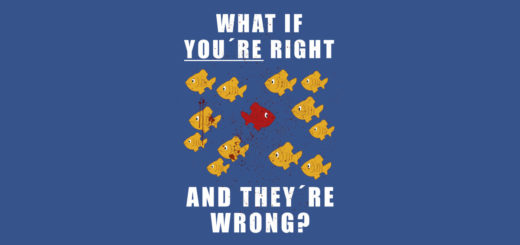
Role of Perception in Mass Media

Today, people are living in their own worlds, so to speak. They think what they want to think without observing what the other side has to say. Everyone is guilty of this. For at least one argument or subject, we are very stubborn and refuse to find what the other side of the debate has to offer. This perception of people thinking that they have no more to learn about a subject and have already made up their mind disconnects many people from the world in a time where world has never been so closely connected.

People would think that with so much more information within a person’s grasp than ever before that a person would draw sources from information from different sides of arguments. Especially with politics, people will only watch news from sources that they know lean heavily to one side.

Image result for conservative and liberal political cartoon

Many conservatives will get their news only from shows like The Ingraham Angle and many liberals will find their news from late night shows such as The Daily Show with Trevor Noah. I personally lean more to the left but often times I watch shows or read articles from sources that I know to be more conservative like Fox News or The Daily Wire. I do this because I am aware of how easily people can become sheltered from outside information. I find that my mother is very sheltered from sources that she disagrees with. She is more on the liberal side of most policies and only gets her news from late night hosts like Stephen Colbert and Trevor Noah. Whenever she hears me playing a conservative network on TV she leaves the room. In doing this she refuses to expose herself to opposing arguments and is very close-minded as a result. By only watching these left-leaning shows, my mother selectively exposes herself to sources which share her beliefs and are one-sided. By doing this she shuts out any information outside of what these shows believe that could help her in taking more educated stances on issues. My mother also watches Real Time with Bill Maher in which she demonstrates selective attention when a debate in the show is underway. Selective attention is “… the tendency for individuals to pay attention to those parts of a message that are consonant with strongly held attitudes, beliefs, or behaviors(Perception and Language Issues in the Mass Media 80). If there is a conservative debating with a liberal on the show, she only really listens to what the liberal person has to say because their opinions on an issue are closer than the conservative’s opinion to my mother’s. When the conservative expresses what their side believes about an issue, my mother turns her ears off and doesn’t acknowledge their right to an opinion. I feel that my mother is like countless other people in shutting out what the opposing side believes and only hearing what they want to hear. It is important for this country’s society for everyone to be open-minded to other sides and unite a currently very divided country.


Personal Writing History

Image result for babylonian writing

Throughout history, writing has been a classification for civilizations. Writing is what was used to separate civilized people from their barbaric counterparts. Writing is an extension of the brain and has allowed for inventions that have shaped today’s world. In today’s world, however, writing is seen as a chore by most people. This may be caused by the fact that schools make writing boring and difficult because they don’t let the students choose their own topic to write about. In early stages of education, a topic given to a class for them to write an essay about is likely intended to make things simpler to teach the fundamentals of writing an essay. In later stages of education such as high school, it appalls me how teachers bar their students learning by not letting the students choose their topic to write about. This causes many students to dislike writing because they can’t write about topics that they want to. I am a victim of this. Throughout my public school career, I was rarely given an opportunity to write about something I wanted to. For this reason, I disliked writing for most of my academic career. In the few instances where I was allowed to write about my personally chosen topic, I have thrived. I passionately researched the topics using countless sources and strove to make the paper as good as possible. I found that I thoroughly enjoy writing when I am interested in the topic and find it to be a chore when I could care less about the topic. I think that the most literate person that I know is my maternal grandfather. My grandfather reads constantly and his knowledge of the world is seemingly endless. Like a normal grandparent, my grandfather’s texts to me are more of an essay about his entire week rather than a regular text. Reading through his long winded texts, I find that he is masterful with his word choice. As I start to read his texts I am immediately drawn in because of how interesting his word choice makes his text seem. My grandfather doesn’t have the best memory but makes it seem like he remembers everything he reads. He has taught me that you don’t have to have an incredible memory to absorb mass quantities of information. I think that in today’s world, writing is very important socially because of texting. Texting has become one of the most widespread forms of communication. Texting is important socially because of how it ties people to one another. Being example, I have observed relationships begin through texting. One’s writing in text can make or break their chances of having a partner. Since the beginning of civilization, writing has been the core of a functioning society. However, I predict that writing will become less important in the near future because of the increasing opportunity for videos and pictures to be seen. I don’t think that writing will disappear because of a opposition to art and writing like many others do. I very rarely use a pencil or pen to write now.

Like most people today, use a laptop, desktop computer, and a smartphone to write. I prefer writing through these tech devices because I am able to type faster than I am able to write with a pen or pencil. Thus far in my academic career, I truly believe that the most important class that I have taken is the computers class I took for one semester when I was in the 6th grade. In this computers class, I learned how to type home row. I find that being able to type fast and efficiently to be the most important skill that I have learned in school. I know that I will use in the future. When I tell older people that I never learned how to write in cursive they are dumbfounded.

Image result for cursive

Cursive is taught to make people be able to write faster and more efficiently. Personally, I could care less about not knowing how to write in cursive because I know that I will rarely be writing in the future. Home row typing is the modern day cursive because both are intended to make writing quicker. Writing is a staple in society as it connects ideas and cultures together especially through the internet. Meaningful writing is a very important skill for one to possess in today’s world. My personal relationship to writing is a good one as long as the topic for my writing is one that I feel as important, interesting, and relevant to me.

3. As He Himself Puts It

In this chapter, The Art of Quoting is reviewed by elaborating on when the appropriate time to use a quotation from a passage is and the structure of a quotation. Quoting is extremely important because using outside knowledge and not citing that knowledge correctly can lead to plagiarism which is very serious and can become means for expulsion. It is advised to only use quotations when knowledge from an outside source cannot be paraphrased. Paraphrasing is used far more often than quoting as it makes the writer use their own words instead of somebody else’s.

What I learned: In this chapter I learned how to properly format a quotation. I learned that the most important part of the quote is in fact not in the quotation but the quote lead-ins. Quote lead-ins tie one’s own writing to the writing of an outside source.

2. Her Point Is

In this chapter, The Art of Summarizing is reviewed by presenting the characteristics of good and bad summaries along with advice on what makes a good summary correct. A characteristic of a good summary is the balance between the writer’s research and opinion. For example, in a summary reviewing the good past actions of a politician, it is not advised to later when analyzing the politician to say that their rhetoric is tearing apart the constitution. It is important when writing a summary to be objective but also have an idea as to what the direction the rest of the passage will take.

What I Learned: In this chapter I learned about the different verbs that are advised to be used when creating a summary. These verbs are intended to be more specific than the overused verbs such as says or states to prevent the reader of the summary from being confused.

1. “They Say”

Part 1 of the book They Say, I Say begins with an anecdote of a speaker at a conference having to do with sociology. The speaker talks about a psychologist who’s work is very controversial. Through the book’s commentary, it is presented that the speaker has lost the audience. The speaker did this buy only giving their view on the psychologist’s work and not referring to the psychologist’s critics. This mistake was described as only presenting the “I Say” part of the speech. The book emphasizes that the correct way the speaker could have started is giving the audience substance on the critics’ stance on the psychologist’s work. This way the audience would have been given content for which they would be able to base their stance on the issue off of.

What I learned: In this chapter, I learned multiple ways to introduce the content surrounding a certain issue when giving a speech. One example is to put yourself in the position of the audience and be able to find certain aspects of your speech that they might be unable to grasp. Another piece of advice given by the book is to give your audience the basic knowledge of the topic that you are speaking on so they won’t be left behind by your speech

False Consensus

Life as we know comes from our perception of our surrounding environment. A person’s entire reality stems from their perception of the world. A saying that describes this phenomenon is: “if a tree falls in a forest and nobody hears it, does it still make a sound?”.

To answer the question, the tree would not make a sound as sound does not exist in nature. Sound is the perception of energy by the human brain. Just as color is the perception by the brain of varying speeds of light being reflected off of objects. A person’s idea of society as a whole is also a perception as a person is unable to know every person’s morals and beliefs just like a person is unable to see what color appears as in nature. People’s behavior, for example, arises as the perceived way that society expects people to act. Societal norms are all just a consensus manifested by a person when in reality they don’t know other people’s actual beliefs and morals.

For example, a 2020 democratic presidential hopeful by the name of Pete Buttigieg is a popular candidate that happens to be homosexual. He currently is polling ahead of most other democratic candidates, but when his supporters are asked how likely they think it is for him to be elected president in 2020, they seem to lack confidence. Almost all of the Buttigiege supporters who are asked this question express their reason for not expecting Buttigiege to win is that the U.S. won’t vote for a homosexual candidate. This is similar to when former president Barack Obama was running for office in the 2008 presidential election as there were many of his supporters thinking that his victory would be unlikely as many voters in the U.S. were prejudice and racist and would never vote for and African-American for president. Statistics from Pew Research Center, however, do not support many of the claims of Buttigieg supporters as “About six-in-ten Americans (61%) support same-sex marriage…”(David Masci, Anna Brown, Jocelyn Kiley 5 facts about same-sex marriage). This poll presents the fact that over half of the country supports same-sex marriage and would likely have no problem with voting for Pete Buttigieg in November 2020. From the point when a person is born, they are constantly forming consensuses about everything through their perception of those things. It helps condense information in the fast moving manner of today’s world and create a reality for people to live by.

Reference:

Masci, David, et al. “5 Facts about Same-Sex Marriage.” Pew Research Center, 24 July 2019, https://www.pewresearch.org/fact-tank/2019/06/24/same-sex-marriage/.

Rimal, Rajiv N. “Media Campaigns and Perceptions of Reality.” Johns Hopkins Bloomberg School of Public Health.

Introduce Yourself (Example Post)

This is an example post, originally published as part of Blogging University. Enroll in one of our ten programs, and start your blog right.

You’re going to publish a post today. Don’t worry about how your blog looks. Don’t worry if you haven’t given it a name yet, or you’re feeling overwhelmed. Just click the “New Post” button, and tell us why you’re here.

Why do this?

  • Because it gives new readers context. What are you about? Why should they read your blog?
  • Because it will help you focus you own ideas about your blog and what you’d like to do with it.

The post can be short or long, a personal intro to your life or a bloggy mission statement, a manifesto for the future or a simple outline of your the types of things you hope to publish.

To help you get started, here are a few questions:

  • Why are you blogging publicly, rather than keeping a personal journal?
  • What topics do you think you’ll write about?
  • Who would you love to connect with via your blog?
  • If you blog successfully throughout the next year, what would you hope to have accomplished?

You’re not locked into any of this; one of the wonderful things about blogs is how they constantly evolve as we learn, grow, and interact with one another — but it’s good to know where and why you started, and articulating your goals may just give you a few other post ideas.

Can’t think how to get started? Just write the first thing that pops into your head. Anne Lamott, author of a book on writing we love, says that you need to give yourself permission to write a “crappy first draft”. Anne makes a great point — just start writing, and worry about editing it later.

When you’re ready to publish, give your post three to five tags that describe your blog’s focus — writing, photography, fiction, parenting, food, cars, movies, sports, whatever. These tags will help others who care about your topics find you in the Reader. Make sure one of the tags is “zerotohero,” so other new bloggers can find you, too.

Design a site like this with WordPress.com
Get started